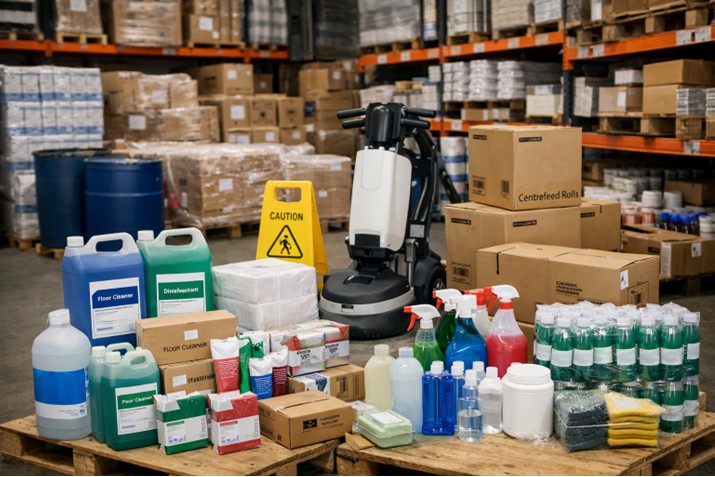
Distributors of wholesale cleaning supplies across Australia face a pressing compliance deadline this December. In October 2025, the Australian Industrial Chemicals Introduction Scheme (AICIS) increased the scope of its evaluation. The presence of 522 PFAS chemicals in products is now a requirement for registered businesses. Businesses just have forty business days to reply.
According to the Industrial Chemicals Environmental Management Standard (IChEMS), the prohibition on per- and polyfluoroalkyl compounds went into effect on July 1, 2025. Perfluorooctanoic acid (PFOA), perfluorooctanesulfonic acid (PFOS), and perfluorohexanesulfonic acid (PFHxS) were the three specific substances that were forbidden. This covers both their isomers and salts. Additionally prohibited are any chemicals that degrade into these poisons.
Understanding the Regulatory Framework
Based on environmental risk, the IChEMS categorisation system divides industrial chemicals into seven schedules. Schedule 1 compounds are not very dangerous. The highest danger group is represented by Schedule 7. This level is set aside for substances with no necessary use that are likely to seriously or permanently harm the environment.
PFAS landed in Schedule 7 for documented reasons. The environment does not naturally decompose these artificial substances. They move through both water and dirt. They build up in living things and pollute groundwater. They stay in the human body for years after they arrive.
The import and production of PFOS, PFOA, and PFHxS were prohibited in Australia in July 2025. Both export and use were prohibited. But the prohibition goes beyond these three particular substances. The prohibition also applies to compounds that break down into these chemicals. Many providers are caught off guard by this expanded reach.
Different Australian states have implemented IChEMS through their own environmental frameworks. New South Wales adopted the register under the Protection of the Environment Operations Act 1997. Queensland integrated it into their business environment regulations. The Commonwealth government continues developing legislation to enforce the ban at borders and on Commonwealth sites. Companies that operate in several jurisdictions have to adhere to the most stringent regulations.
The Health Data Supporting Regulatory Measures
A historic classification was developed in 2023 by the International Agency for Research on Cancer of the WHO. PFOA was classified to Group 1, which is carcinogenic to people. PFOS was categorised as Group 2B, meaning it may cause cancer in people. This is the most compelling evidence to date that these substances increase the risk of cancer.
The classification resulted from extensive scientific review. Researchers found sufficient evidence of cancer in experimental animals. They also found strong mechanistic evidence of harm in exposed humans. Studies linked PFAS exposure to kidney cancer and testicular cancer. Evidence also points to thyroid cancer. Additional research shows immune system suppression and hormonal disruption.
The global economic burden of PFAS contamination cleanup runs into billions of dollars. The estimated cost of treating PFAS in wastewater and landfill leachate in Minnesota alone is $28 billion. Regulation-based prevention is significantly more cost-effective than trying to clean up after extensive pollution.
Hidden PFAS in Commercial Cleaning Products
PFAS chemicals appear in numerous categories of wholesale cleaning supplies. PFAS are frequently used in industrial degreasers due to their improved ability to resist oil. Products for treating floors, such as polishes and sealants, may contain formulations based on PFAS. In the past, PFAS was used to provide stain resistance in carpet and upholstery protectors. These substances are often found in specialist cleaning chemicals and antifoaming agents.
The problem is that PFAS may be present in goods that were not purposefully added by producers. Contamination may arise from production procedures or raw materials. Verification becomes crucial as a result.
SDS, or safety data sheets, are the first line of protection. Businesses need to ask each supplier in their chain for updated SDS documentation. Searching specifically for CAS numbers linked to prohibited PFAS substances is advised by product testing labs. Attention to vague ingredient descriptions that might hide PFAS content is critical. The expanding industry emphasis on chemical transparency is exemplified by resources such as the ingredient safety comparison guide published by Complete Wholesale Suppliers.
The October 2025 Compliance Expansion
The October 2025 AICIS assessment represents Australia’s most comprehensive evaluation of PFAS in commercial products to date. Unlike the initial July ban targeting three specific chemicals, this expansion covers 522 different PFAS compounds.
All AICIS-registered introducers received notices requiring them to review their introduction records from September 2023 through August 2025. The electronic response form asks whether companies introduced any of the listed PFAS during this period.
Cleaning products in bottles are considered articles designed to release industrial chemicals during use. This classification means they fall squarely under reporting requirements. Even when uncertainty exists about PFAS content, companies must respond. The form allows selection of “not sure” with explanation of why definitive information remains unavailable. The December 2025 deadline allows little room for delay. Compliance requires systematic action:
Essential Compliance Steps:
- Review all chemical introduction records from September 2023 through August 2025
- Compare product formulations against the 522 PFAS list
- Contact suppliers for CAS numbers when proprietary information limits access
- Submit responses through unique ID links provided in notices
- Document all verification efforts thoroughly
Verification Strategies That Work
Independent laboratory testing provides certainty when supplier information falls short. Several Australian laboratories now offer PFAS screening services specifically designed for commercial products. The average cost of testing a product sample is between $300 and $800. This investment offers defense against future fines and regulatory liability.
Experts in environmental compliance advise methodical techniques instead of depending just on brand names. Precursor chemicals that may not be readily apparent without appropriate chemical composition verification are among the prohibited substances.
Standard procurement procedures should include written statements from vendors attesting to the absence of PFAS in their goods. Continuous compliance assurance can be achieved by establishing regular SDS review schedules as opposed to one-time audits. As scientific knowledge advances, regulatory standards will probably become even more stringent.
Supplier databases and compliance toolkits are being offered by trade bodies such as Cleaning Industries Alliance Australia. These resources help navigate technical verification aspects without requiring in-house chemistry expertise.
PFAS-Free Alternatives Emerge
Manufacturers in Australia are creating efficient substitutes for formulations that contain PFAS. Plant-derived solvents used in bio-based cleaning products provide a potent cleaning effect without being persistent in the environment. Surfactants based on silicone function exceptionally well for protective coatings and floor treatments.
Performance testing demonstrates that PFAS alternatives work effectively for most applications. Some specialty uses require modified application methods or slightly different product handling. However, overall cleaning performance typically meets or exceeds customer requirements once users adapt to different product characteristics.
Cost presents an initial consideration. PFAS-free formulations currently command approximately 20 to 25 per cent price premiums compared to traditional products. However, manufacturing economies of scale are steadily reducing these costs. Many businesses find that reformulation investments are offset by reduced regulatory risks and enhanced market positioning.
Purchasing decisions are increasingly influenced by environmental responsibility. Businesses that proactively move to PFAS-free product lines, such as Complete Wholesale Suppliers, present themselves as leaders in the industry rather than as regulatory laggards.
Taking Action Before December
Time is running short for wholesale cleaning supplies distributors who haven’t begun compliance efforts. Conducting complete chemical inventory audits across all product lines is essential. Companies should request updated SDS from all suppliers in the distribution chain. Searching for banned CAS numbers across product formulations cannot be delayed. Responding to AICIS notices before deadlines is mandatory, even without complete information. Identifying PFAS-containing products and developing replacement timelines should begin immediately.
Longer-term compliance requires regular SDS review schedules integrated into procurement processes. Membership in industry associations providing regulatory updates helps companies stay informed. Future audits are prevented by documentation systems demonstrating continuous compliance efforts. Competitive posture is strengthened by taking into account PFAS-free product lines as market differentiators.
When there is confusion regarding compliance obligations, expert assistance from environmental experts or legal advisors becomes important. The regulatory structure is still changing. For managing jurisdictional differences and foreseeing future limits, professional advice is helpful.
Future Limitations and Industry Prospects
There is no indication that the regulatory momentum toward PFAS bans will slow. By 2030, the European Union wants to outlaw all 14,000 varieties of PFAS. By November 2025, Australia’s Senate PFAS committee is anticipated to submit its report. This might suggest more extensive regulations that go beyond the present three prohibited chemicals.
Competitive advantages come from proactive compliance. Businesses that successfully switch to PFAS-free operations steer clear of supply chain interruptions. They avoid reputational harm and regulatory fines. According to industry research, early adopters of PFAS-free formulations gain market share from rivals who are having difficulty adhering to regulations.
The deadline for December is drawing near. Verification and documentation are necessary for the next steps. Reformulation is often required. The sector has already dealt with regulatory changes, such as phosphate limitations and biodegradability specifications. Restrictions on PFAS offer a challenge as well as a chance to develop more environmentally friendly corporate practices.
Leave a Reply