Introduction
The global football landscape is currently shifting its gaze toward a monumental horizon. As we move past the tactical evolutions and emotional highs of recent international tournaments, the anticipation for the world cup 2026 is reaching a fever pitch. For the first time in history, the tournament will be jointly hosted by three nations—the United States, Canada, and Mexico—marking an unprecedented expansion in scale, logistics, and competitive depth. With 48 teams set to compete, the path to lifting the trophy will be more grueling and unpredictable than ever before. In this article, we analyze the current state of international football and explore which nations are best positioned to emerge victorious in this historic edition of the tournament.
The Evolution of the Tournament Format
The world cup 2026 represents a radical departure from the traditional 32-team format that football fans have grown accustomed to since 1998. This expansion to 48 teams introduces a new dynamic: a longer tournament, more group-stage matches, and a heightened margin for error.
From a tactical perspective, managers will need to manage squad depth with surgical precision. Teams with a deep talent pool—specifically those who can rotate players without a significant drop-off in quality—will hold a distinct advantage. The grueling travel schedule across North America, combined with the varying climates of the host cities, means that physical conditioning and squad rotation will be just as important as technical prowess.
Contenders to Watch
Predicting a winner this far out is a complex task, but historical data and current trajectories allow us to identify the primary favorites.
The European Powerhouses
European nations have dominated the tournament for the last two decades.
- France: With an almost endless supply of young, elite-level talent, France remains the team to beat. Their ability to transition from defense to attack is arguably the best in the world.
- England: Having reached deep stages in recent tournaments, the “Three Lions” are entering a golden generation. If they can refine their tactical consistency, they are genuine contenders for the title.
- Spain: Following their success in recent continental competitions, Spain’s reliance on technical midfield control continues to be a blueprint for modern success.
The South American Challenge
South American football has long been the heartbeat of the international game.
- Argentina: As the reigning champions, Argentina has proven they can handle the pressure of the big stage. Their blend of tactical discipline and creative brilliance, led by a new generation of stars, ensures they will remain a formidable force throughout the world cup 2026.
- Brazil: Brazil is perpetually in the conversation. With their focus on regaining their identity and defensive stability, they possess the individual flair required to break down any opposition.
The Impact of the Host Nations
Hosting a tournament provides a unique “home-field” advantage, though the challenge is split among three nations this time. The United States, in particular, has seen a massive surge in the popularity of the sport. Their investment in infrastructure and youth development is starting to pay dividends on the international stage. While it may be ambitious to label them as favorites, the home crowd support in cities like New York, Los Angeles, and Dallas could provide the psychological edge needed to pull off major upsets against more established footballing giants.
For more insights into how the host cities are preparing, you can visit the official FIFA website for ongoing updates on match schedules and venue logistics.
Key Factors for Success
If we look at the history of world champions, a few recurring themes emerge that will likely dictate the outcome of the world cup 2026:
- Defensive Solidity: Teams that concede the fewest goals often progress the furthest. In a tournament setting, a clean sheet is often more valuable than a high-scoring game.
- Tactical Versatility: The ability to switch between formations based on the opponent is a hallmark of a championship-winning manager.
- Psychological Resilience: Playing in front of massive, high-pressure crowds requires mental fortitude. Teams that have experienced success in high-pressure penalty shootouts and knockout stages are statistically more likely to triumph.
Conclusion
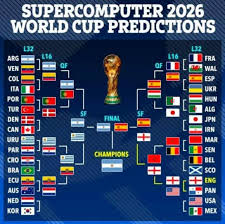
The road to the world cup 2026 is paved with excitement, uncertainty, and immense potential. As the host nations prepare to welcome the world, the teams are already hard at work refining their strategies and scouting the next generation of talent. While traditional powerhouses like France and Argentina remain at the forefront of the conversation, the expanded 48-team format leaves the door wide open for an underdog story or a resurgence from a traditional giant.
Ultimately, the champion will be the team that best balances technical brilliance with physical stamina and mental toughness. Regardless of who lifts the trophy, the tournament is poised to be a landmark event in sporting history, uniting fans from across the globe in a celebration of the beautiful game. Keep your eyes on the qualifiers, as the journey to crowning a new champion has already begun.
Leave a Reply