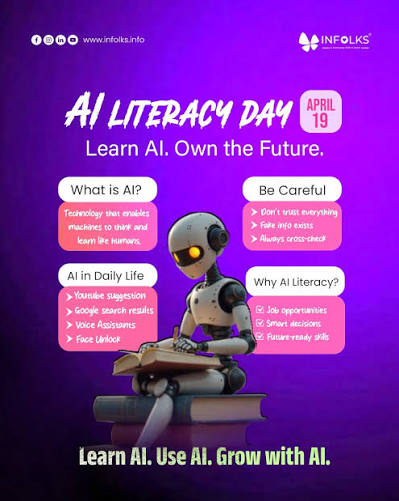
Artificial intelligence is no longer limited to research laboratories, large technology companies, or highly technical industries. It is now influencing how people search for information, complete assignments, communicate with customers, create content, analyze data, manage businesses, and make everyday decisions. As AI becomes part of more tools and platforms, understanding how to use it responsibly is becoming a practical skill rather than an optional advantage. Digital resources such as DigitalConnectMag.com CO can help readers explore the changing world of artificial intelligence, software, business technology, websites, and digital marketing in a clear and accessible way.
The growing importance of AI has created a new type of digital skill: AI literacy.
AI literacy does not mean that everyone needs to become a programmer, data scientist, or machine learning expert. For most people, it simply means understanding what artificial intelligence can do, where its limitations exist, how to communicate with AI systems effectively, and when human judgment is still necessary.
Just as basic computer skills became essential during the growth of the internet, AI literacy is becoming increasingly valuable in education, business, creative work, marketing, and everyday digital life.
What Does AI Literacy Actually Mean?
AI literacy is the ability to understand, use, evaluate, and question artificial intelligence systems.
A person who is AI-literate does not simply know how to open an AI tool and type a question. The person understands that the quality of the output often depends on the quality of the input, the context provided, the reliability of the information, and the need for human review.
AI literacy includes several practical abilities:
- understanding the basic purpose of AI tools;
- knowing how to give clear instructions;
- evaluating AI-generated information;
- recognizing possible errors or bias;
- protecting personal and sensitive information;
- deciding when AI is useful and when it is not;
- applying human judgment before acting on important outputs.
These skills are becoming relevant across many professions.
A student may use AI to understand a difficult subject. A marketer may use it to organize content ideas. A business owner may use automation to improve customer support. A developer may use an AI assistant to review code.
The tools may be different, but the need for critical thinking remains the same.
AI Is Becoming Part of Everyday Work
One reason AI literacy is becoming more important is that artificial intelligence is being integrated into ordinary workplace tools.
Many people may already be using AI features without thinking of themselves as AI users.
Email platforms can suggest replies. Writing tools can correct sentences. Search engines can summarize information. Business software can identify patterns in customer behavior. Design platforms can generate layouts or images.
This trend will likely continue as companies add more AI-powered features to software people already use.
The ability to work effectively with these tools can improve productivity.
For example, an employee may use AI to:
- summarize a long document;
- organize meeting notes;
- create a first draft;
- compare several ideas;
- prepare questions for research;
- improve the structure of a report.
However, using AI effectively requires more than speed.
A poorly written prompt can produce a weak result. An inaccurate output can create problems if nobody checks it. Sensitive information can be exposed if employees do not understand privacy risks.
This is why AI literacy is not only about efficiency. It is also about responsibility.
Better Questions Often Lead to Better Results
One of the most valuable AI skills is learning how to ask better questions.
People sometimes assume that an AI tool should automatically understand everything they want. They enter a short command, receive a weak answer, and conclude that the technology is not useful.
In reality, AI systems often perform better when they receive clear context.
Compare these two instructions:
“Write about marketing.”
And:
“Explain three practical digital marketing strategies for a small local business with a limited budget. Use simple language and include one example for each strategy.”
The second instruction provides a clearer goal, audience, scope, and format.
Learning how to provide useful context can improve AI-generated results.
Effective instructions may include:
- the goal of the task;
- the intended audience;
- the preferred tone;
- important limitations;
- the desired format;
- examples of what is needed.
This ability is useful far beyond AI tools. Clear communication is valuable in almost every profession.
The rise of AI may actually encourage people to become better at defining problems and explaining what they need.
Critical Thinking Matters More Than Ever
Artificial intelligence can produce polished and confident responses.
That can make incorrect information difficult to notice.
An AI-generated answer may sound professional while still containing outdated facts, missing context, weak assumptions, or complete errors.
This is why critical thinking is one of the most important parts of AI literacy.
Users should ask questions such as:
- Does this information make sense?
- Can the important claims be verified?
- Is the answer based on reliable evidence?
- Is there another perspective?
- Could important context be missing?
- What would happen if this information were wrong?
The level of verification should depend on the importance of the decision.
A casual brainstorming idea may not require extensive checking.
Medical, financial, legal, academic, and business decisions deserve much more careful review.
AI can help people find starting points, organize information, and explore possibilities. It should not automatically become the final authority on important matters.
Students Need More Than the Ability to Use AI
Artificial intelligence is already changing education.
Students can use AI tools to explain difficult concepts, generate practice questions, summarize notes, improve writing, and create study plans.
These capabilities can make learning more flexible.
A student who does not understand a topic can ask for a simpler explanation. Someone who learns visually can request an example. A learner can ask the same question in several ways until the idea becomes clear.
However, there is a major difference between using AI to support learning and using it to avoid learning.
If a student asks AI to complete every assignment without understanding the material, the tool may save time in the short term but weaken the student’s knowledge.
Effective AI use should encourage:
- deeper questions;
- independent thinking;
- comparison of ideas;
- active practice;
- verification of information.
The goal should be to improve understanding rather than simply produce faster answers.
Schools, universities, parents, and students will increasingly need to discuss not only whether AI should be used, but how it should be used responsibly.
Businesses Need Employees Who Can Use AI Wisely
Companies are investing in automation because they want to improve efficiency.
However, technology alone does not guarantee better performance.
A company can buy an advanced AI platform and still get poor results if employees do not understand how to use it properly.
Businesses need people who can identify real opportunities for AI.
For example, AI may be useful for:
- organizing large amounts of information;
- handling repetitive support questions;
- summarizing reports;
- assisting with research;
- improving routine workflows;
- identifying useful patterns in data.
But not every task should be automated.
Complex customer complaints may require empathy. Strategic decisions may need experience. Sensitive negotiations may require human judgment. Brand communication may need cultural understanding.
AI-literate employees can help businesses find the right balance.
Instead of asking, “How can we use AI everywhere?” a better question is:
“Where can AI create real value without reducing quality, trust, or safety?”
That mindset can prevent businesses from adopting technology simply because it is fashionable.
AI Literacy Is Changing Creative Work
Writers, designers, video creators, marketers, and other creative professionals are experiencing rapid changes.
AI can help generate ideas, organize concepts, create rough drafts, explore visual directions, and speed up repetitive tasks.
This has created both excitement and concern.
Some people believe AI will completely replace creative professionals. Others believe it has little value.
The reality is more complex.
AI can produce content quickly, but speed is not the same as originality.
Creative work often depends on:
- personal experience;
- emotion;
- cultural understanding;
- taste;
- judgment;
- storytelling;
- audience awareness.
These qualities are difficult to reduce to simple automation.
An AI-literate creative professional understands how to use technology for support while protecting the human qualities that make the work meaningful.
A writer may use AI to explore possible headings but still develop the original argument.
A designer may use AI to test concepts but make the final decisions based on brand identity.
A marketer may generate campaign ideas but choose the final message based on customer understanding.
The future of creative work may not be a competition between humans and AI. It may be a process of learning which parts of creativity benefit from technology and which parts require human experience.
Privacy Awareness Is a Major Part of AI Literacy
Convenience can make people careless.
Users may paste confidential emails, private business documents, customer details, financial information, or personal data into AI tools without considering what happens to that information.
This can create serious privacy risks.
Before using an AI system, users should consider:
- Is this information confidential?
- Does it contain personal data?
- Does my company allow this tool?
- Do I understand how the platform handles information?
- Can I remove sensitive details before using the tool?
Privacy awareness is especially important in workplaces.
Employees should follow company policies and avoid sharing information they would not place in a public environment.
AI literacy therefore includes knowing when not to use a tool.
A fast result is not worth exposing sensitive information.
Not Every AI Tool Deserves Trust
The rapid growth of artificial intelligence has led to an explosion of new tools.
Some are genuinely useful.
Others are unreliable, poorly designed, or created mainly to take advantage of public interest in AI.
Users need to evaluate tools carefully.
Before depending on an AI platform, it is useful to consider:
What Problem Does It Solve?
A tool should have a clear purpose.
Using software simply because it includes the word “AI” is not a strong reason to adopt it.
Does It Save Meaningful Time?
A tool that requires constant correction may create more work instead of less.
How Accurate Is It?
The answer may depend on the task.
A tool used for brainstorming does not require the same level of accuracy as one used for financial analysis.
Is the Pricing Reasonable?
Some users subscribe to too many platforms and then barely use them.
How Does It Handle Privacy?
Users should understand what type of information they are sharing.
Smart adoption is more valuable than collecting dozens of tools.
AI Can Support Small Businesses
AI literacy can be particularly valuable for entrepreneurs and small business owners.
Small teams often have limited time and resources.
AI can help with routine tasks such as:
- organizing ideas;
- drafting internal documents;
- preparing customer support templates;
- researching general market trends;
- creating workflow checklists;
- summarizing information.
This can help a small team operate more efficiently.
However, business owners should not assume that AI can replace strategy.
A tool does not automatically understand a company’s customers, reputation, goals, or financial limitations.
Human decisions remain essential.
The strongest use of AI usually starts with a clear business problem.
For example:
“We spend too much time answering the same basic customer questions.”
This is more useful than:
“We need to use AI because everyone else is using it.”
Problem-first thinking helps businesses choose technology more intelligently.
Digital Marketing Requires Stronger Judgment
Artificial intelligence has become common in digital marketing.
Marketers use AI for content planning, keyword organization, data analysis, email ideas, reporting, and audience research.
These capabilities can be valuable.
However, AI has also made it easier to create large amounts of low-quality content.
This creates a new challenge.
As automated content increases, quality and trust become even more important.
Marketing still depends on understanding real people.
Successful brands need to know:
- what their audience cares about;
- which problems need to be solved;
- what information is genuinely useful;
- how to communicate clearly;
- how to build credibility.
AI can support these decisions, but it cannot automatically create trust.
AI-literate marketers use automation to improve efficiency without allowing it to remove the human understanding behind the campaign.
AI Literacy Will Continue to Evolve
The meaning of digital literacy has changed over time.
Years ago, knowing how to use email or search the internet was considered an important digital skill.
Later, people needed to understand social media, cloud software, online privacy, and digital communication.
AI literacy is the next stage of that evolution.
The tools available today will change.
Some platforms will disappear. New ones will become popular. Features that currently seem advanced may become normal.
This is why learning every individual tool is less important than developing adaptable skills.
People should learn how to:
- understand new systems;
- test them carefully;
- evaluate their usefulness;
- protect sensitive information;
- verify important outputs;
- keep human judgment involved.
These abilities will remain valuable even as specific technologies change.
The Future Belongs to Adaptable Learners
There is understandable concern about how artificial intelligence may affect jobs.
Some tasks will change. New roles will appear. Certain repetitive activities may become more automated.
However, people have adapted to major technological changes before.
The most valuable skill may not be knowing one specific platform.
It may be the ability to keep learning.
Adaptable people are willing to:
- update their skills;
- question old methods;
- test new tools;
- learn from mistakes;
- combine technology with experience.
AI literacy supports this adaptability.
It helps people approach new technology with neither blind excitement nor unnecessary fear.
A balanced approach is more useful.
People should understand the opportunities, recognize the risks, and make informed decisions.
Conclusion
Artificial intelligence is becoming part of education, business, marketing, creative work, research, and everyday digital life. As a result, AI literacy is becoming an increasingly important skill.
People do not need to understand every technical detail of machine learning.
They do need to know how to use AI thoughtfully.
That means asking clear questions, checking important information, protecting privacy, understanding limitations, and knowing when human judgment is necessary.
The people and businesses that benefit most from AI will not necessarily be those using the largest number of tools. They will be those who understand how to connect technology with real goals, useful work, and responsible decision-making.
As artificial intelligence and the wider digital world continue to evolve, staying informed will remain essential. Readers interested in practical information about AI, software, business technology, websites, and digital marketing can explore DigitalConnectMag.com CO for more digital insights and useful resources.
Leave a Reply