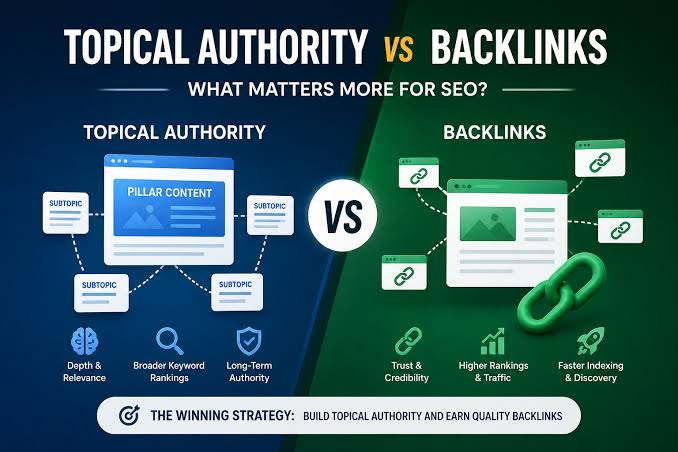
Backlinks tend to get the majority of attention in SEO discussions, largely because they involve external effort and are visible in every competitor analysis tool. But a site’s internal link structure determines how effectively that external authority actually gets distributed once it arrives. Treating the two as separate disciplines, rather than parts of the same system, is one of the more common gaps in otherwise solid SEO strategies.
Authority Flows Through a Site, It Doesn’t Just Land on One Page
When an external site links to a page, that page gains authority — but internal links determine where that authority goes next. A homepage with strong backlinks but poor internal linking to deeper category or product pages effectively traps most of that value at the top of the site. A thoughtful internal linking structure lets authority flow downward and sideways, lifting pages that may never earn an external link of their own.
Orphaned Pages Waste External Link Investment
It’s common for site owners to invest heavily in a backlink campaign for a specific page while that page sits several clicks deep with few or no internal links pointing to it from elsewhere on the site. The result is a page that’s hard for both crawlers and users to find, regardless of how strong its external link profile becomes. Auditing for orphaned or poorly linked pages before starting an external campaign ensures the investment actually reaches where it’s needed.
Anchor Text Consistency Reinforces Relevance
Just as external anchor text signals what a page is about, internal anchor text does the same — and consistency between the two reinforces the signal rather than diluting it. A page that receives external links with commercial or topical anchors, paired with internal links using similar language from related pages on the site, presents a much clearer topical picture than a page linked inconsistently from both directions.
Building a Deliberate Internal Linking Structure
A useful starting point is mapping which pages currently receive the most external links, then checking how well those pages link internally to related, lower-authority content. Pillar pages — comprehensive resources on a core topic — should link out to supporting articles, and those supporting articles should link back, creating a cluster that distributes authority in both directions rather than concentrating it in one place. For site owners looking to build this out properly, a detailed guide to Internal Linking for SEO covers the practical mechanics of structuring these clusters in more depth than a single section here can.
Treating the Two as One System
The sites that get the most out of their link building spend aren’t necessarily the ones with the most backlinks — they’re the ones where every earned or purchased link lands on a site structured to actually make use of it. Before the next external link campaign, it’s worth auditing internal structure first. Often the more cost-effective improvement isn’t another external link at all, but simply restructuring how the authority already on the site is being distributed.
Leave a Reply