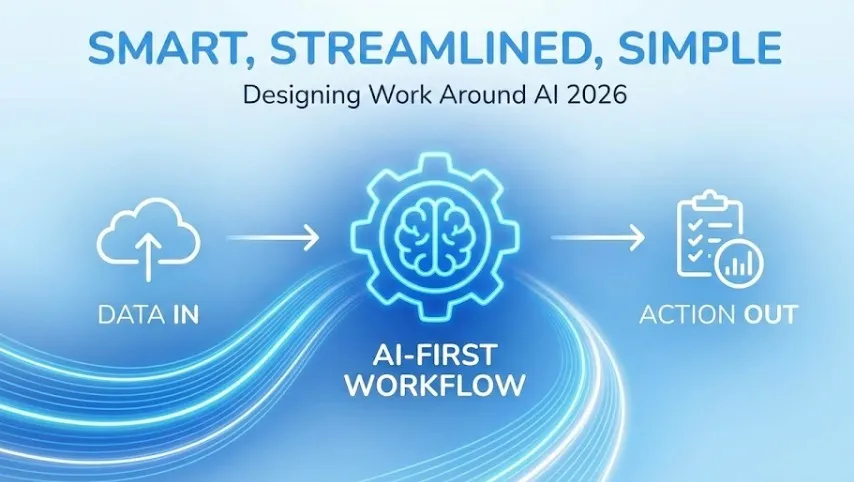
Most content teams don’t have a production problem. They have a coordination problem.
The ideas exist. The tools exist. The talent exists. What’s missing is a system that connects all three in a way that keeps output consistent, on-brand, and scalable — without burning out the people responsible for making it happen.
AI has changed what’s possible, but it hasn’t automatically solved the workflow problem. In fact, for many creators and small teams, more AI tools means more fragmentation: a different platform for writing, another for images, another for scheduling, and no single thread tying them together.
Building a smarter content workflow in 2026 isn’t about adding more tools. It’s about connecting the right ones around a clear process.
Start With the Brief, Not the Tool
The most common mistake content teams make is reaching for a tool before defining the goal. An AI writing assistant, an image generator, a scheduler — none of these deliver consistent results without a clear brief to work from.
Before any piece of content is created, the team should agree on three things: who it’s for, what it needs to accomplish, and where it will live. That sounds obvious, but in practice most content is created the other way around — the platform dictates the format, the format dictates the message, and the message ends up being whatever fit the template.
A well-written brief takes five minutes. It saves hours of revision and eliminates the most common reason content gets rejected internally: it didn’t match what anyone actually needed.
Use AI for the Heavy Lifting, Not the Thinking
AI tools have become genuinely useful for the parts of content creation that are time-consuming but not strategically complex. First drafts, headline variations, caption rewrites, keyword research, image resizing — these are tasks where AI saves real time without compromising the quality of the thinking behind them.
Where teams go wrong is using AI as a replacement for strategy rather than a support for execution. An AI-generated article that hasn’t been shaped by someone who understands the audience, the brand voice, and the competitive landscape will read exactly like what it is: a technically competent piece of writing with nothing distinctive about it.
The best workflow keeps humans in charge of the brief, the angle, and the final edit. AI handles the draft, the variations, and the repetitive production work in between. Platforms like redeepseek.com are built around exactly this model — combining AI speed with expert human review so the output is both fast and genuinely useful.
Organize Your Assets Before You Scale
This is where most growing content operations break down. A team produces good content for a few months, builds up a library of approved images, branded templates, video clips, and written copy — and then discovers that nobody can find anything.
Files live in email threads, Slack channels, personal desktops, and shared drives with folder names that made sense to the person who created them and nobody else. Every new piece of content starts from scratch because the approved assets from last month’s campaign are effectively invisible.
The fix is simpler than it sounds: build a shared, organized content library before you need one. Tools like PicsArt give teams access to a centralized hub of templates, branded image assets, and creative elements that anyone on the team can find, use, and build on — rather than recreating the same graphics from scratch every time a new post goes out. When the library is in place and maintained, production speed increases, brand consistency improves, and onboarding new team members becomes dramatically easier.
Build Approval Into the Process, Not Onto the End
One of the quietest productivity killers in content operations is the approval bottleneck. A piece of content gets written, designed, and scheduled — and then sits in someone’s inbox for three days waiting for a sign-off that takes thirty seconds to give.
The problem isn’t that people are slow. It’s that approval is treated as a final step rather than a continuous part of the process. When the brief is reviewed upfront, the draft is shared early, and feedback is invited at specific stages rather than all at once at the end, the final approval becomes a formality rather than a gate.
Building this into your workflow means being specific about who needs to see what, and when. A simple internal document that maps content type to approval requirements eliminates most of the confusion. It also makes it easier to spot when the approval chain has grown too long — which, in most organizations, it has.
Measure What Feeds the Next Piece
A content workflow that doesn’t loop back into itself is a production line, not a system. The difference between teams that consistently improve and teams that plateau is whether they use performance data to inform what they create next.
This doesn’t require a sophisticated analytics setup. It requires a habit: after every significant piece of content, spend fifteen minutes asking what worked, what didn’t, and what that suggests about the next brief.
Did the post with a real photo outperform the one with a stock image? The brief for next month should reflect that. Did the shorter version of the email get a higher click rate? That’s a format decision, not a luck decision.
AI tools can help surface these patterns faster, but the interpretation still requires a human who understands why the audience behaved the way they did — not just that they did.
The Workflow Is the Product
The content itself — the articles, the social posts, the videos — gets most of the attention. But the workflow that produces it consistently, at a quality worth publishing, is what actually determines whether a content operation succeeds or stalls.
Getting the workflow right is slower than just producing more content. But it’s the only approach that compounds. Every improvement to the brief, the asset library, the approval process, or the feedback loop makes every future piece of content easier to produce and more likely to work.
That’s the shift worth making in 2026: from producing content to building the system that produces it well.
Leave a Reply