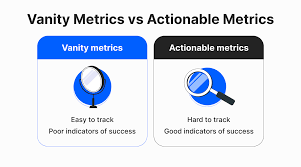
Procurement SLAs are supposed to create clarity, accountability, and predictability.
In reality, many of them do none of that. Why? Because most procurement SLAs measure activity, not outcomes.
- Orders placed on time
- Tickets acknowledged within X hours
- “Estimated delivery” ranges
- High-level fulfillment percentages
These are vanity metrics.
They don’t tell you whether procurement actually worked.
A modern procurement SLA should answer one simple question:
Did procurement enable the business to operate without friction?
This article breaks down procurement SLAs that actually predict business outcomes—SLAs that finance, IT, HR, and operations can rely on when things scale, go remote, or break unexpectedly.
You’ll see what to measure, how to define it, and why it matters.
No fluff.
No vendor spin.
Just practical SLAs that survive real-world pressure.
Why Most Procurement SLAs Fail
Before we design better SLAs, it helps to understand why the old ones don’t work.
Most procurement SLAs fail because they:
- Focus on averages instead of variability
- Measure promises instead of performance
- Stop at delivery, ignoring usability
- Avoid accountability for exceptions
- Require manual follow-ups to get data
An SLA that looks green while teams are blocked is worse than no SLA at all.
Here’s the core problem:
Procurement doesn’t fail loudly. It fails quietly.
- A laptop arrives late, but no escalation fires
- A device arrives unusable, but replacement takes weeks
- A return is “initiated,” but never completed
- A report exists, but only if you ask for it
Outcome-driven SLAs force procurement to be honest about reality.
What Outcome-Driven Procurement SLAs Look Like
Outcome-driven SLAs are designed backward from business impact.
They don’t ask:
- “Did we ship on time?”
They ask:
- “Was the employee productive when they needed to be?”
They don’t ask:
- “Was the ticket acknowledged?”
They ask:
- “Was the issue resolved before it caused downtime?”
Strong SLAs share five traits:
- They use medians and tail risk, not averages
- They define clear ownership, not shared blame
- They include time-bound commitments, not intentions
- They cover the full lifecycle, not just purchasing
- They produce automatic reporting, not manual requests
Let’s break down the SLAs that matter most.
Lead-time SLA by Region (Median + P95), Not “Estimated Delivery”
“Estimated delivery” is one of the most misleading phrases in procurement.
It hides risk.
It hides variance.
It hides failure.
A real SLA does not talk about estimates.
It talks about actual lead times, by region, with statistical clarity.
What This SLA Measures?
This SLA measures how long it really takes—from order approval to delivery—in each geographic region.
Not an average.
Not a promise.
Actual observed performance.
You should require:
- Median lead time (p50)
- 95th percentile lead time (p95)
- Broken out by region and country
Why Median and P95 Matter?
Averages lie.
If half your orders arrive in 3 days and half arrive in 30 days, the average looks “acceptable.”
The experience does not.
Median (p50) tells you what most people experience.
P95 tells you how bad things get when they go wrong.
Both matter.
What a Good Lead-Time SLA Includes?
A strong lead-time SLA should define:
- Order start point (approval timestamp, not PO creation)
- Delivery endpoint (in-hand, not “out for delivery”)
- Region-specific targets
- Separate SLAs for standard vs. expedited orders
Example structure:
- North America:
- Median ≤ 5 business days
- P95 ≤ 10 business days
- EMEA:
- Median ≤ 7 business days
- P95 ≤ 14 business days
- APAC:
- Median ≤ 10 business days
- P95 ≤ 21 business days
Why This Predicts Outcomes?
Lead-time SLAs tied to medians and tail risk:
- Reveal systemic bottlenecks
- Prevent surprises during hiring spikes
- Enable realistic workforce planning
- Reduce last-minute escalations
They also expose whether your end-to-end procurement process actually works across borders—or just looks good in HQ.
DOA Rate Targets + Replacement Window Commitments
Dead-on-arrival (DOA) devices are inevitable.
How procurement handles them is not.
Most SLAs stop at delivery.
That’s where real pain often begins.
What This SLA Measures?
This SLA measures:
- The percentage of devices that arrive unusable
- How quickly replacements are delivered
- Whether replacements are frictionless or painful
You should never accept “we’ll handle it” as an SLA.
DOA Rate Targets
Start with a clear, measurable target.
Examples:
- DOA rate ≤ 0.5% per quarter
- DOA rate reported by device model and region
This forces vendors to:
- Track quality, not just shipping
- Identify problematic SKUs
- Improve packaging and handling
Replacement Window Commitments
The real SLA is not the DOA rate.
It’s the replacement window.
A strong SLA defines:
- Time to replacement shipment
- Time to in-hand replacement
- Whether return shipping is pre-arranged
Example commitments:
- Replacement order created within 1 business day
- Replacement delivered within original region’s median lead time
- Prepaid return label included automatically
Why This Predicts Outcomes
Without this SLA:
- Employees wait weeks for replacements
- Managers lose confidence in procurement
- IT absorbs frustration it didn’t cause
With it:
- Downtime becomes predictable
- Employee trust improves
- Procurement owns the full experience
This is especially critical when devices are centrally managed via Remote device management, where hardware failure directly impacts security and compliance.
“First-Day Productivity” SLA: Device Ready + Enrolled + Compliant
Delivery does not equal readiness.
A device that arrives unconfigured is not a successful procurement outcome.
It’s a handoff problem waiting to explode.
What This SLA Measures
This SLA measures whether an employee can work on day one, without IT intervention.
It includes three non-negotiables:
- Device is delivered
- Device is enrolled
- Device is compliant
All three must be true.
Device Ready
“Ready” must be defined.
At minimum:
- Correct device model
- Correct OS version
- Required accessories included
- Power-on successful
No interpretation.
No excuses.
Enrolled
Enrollment should be automatic.
This includes:
- MDM enrollment completed
- User identity assigned
- Policies applied
Manual enrollment breaks scale.
Compliant
Compliance means:
- Security baselines applied
- Encryption enabled
- Required software installed
- Updates not blocked
A device that violates policy is not productive—it’s a risk.
Defining the SLA
A strong SLA might read:
- 99% of devices meet first-day productivity criteria
- Measurement taken within 24 hours of delivery
- Failures trigger automatic remediation
Why This Predicts Outcomes
This SLA directly correlates to:
- Employee satisfaction
- IT ticket volume
- Security posture
- Time-to-value for new hires
It also forces procurement, IT, and security to align around outcomes—not handoffs.
When procurement integrates tightly with Remote device management, this SLA becomes enforceable instead of aspirational.
Reverse Logistics SLA: Pickup Speed, Packaging, Chain-of-Custody
Procurement doesn’t end when an employee leaves.
That’s where risk often spikes.
Returns, refreshes, and offboarding expose gaps that traditional SLAs ignore.
What This SLA Measures
This SLA measures how effectively devices are recovered, secured, and tracked.
It should cover:
- Pickup speed
- Packaging quality
- Chain-of-custody integrity
Each one matters.
Pickup Speed
Time matters during offboarding.
Define:
- Time from offboarding trigger to pickup request
- Time from request to actual pickup
Example targets:
- Pickup scheduled within 1 business day
- Device collected within 3 business days (region-adjusted)
Delays increase loss, theft, and data exposure.
Packaging
Poor packaging destroys resale value and increases damage.
Your SLA should specify:
- Approved packaging standards
- Tamper-evident materials
- Who provides the packaging
This prevents finger-pointing later.
Chain-of-Custody
This is the most overlooked element.
A real SLA requires:
- Serialized device tracking
- Timestamped custody transfers
- Audit-ready documentation
You should always know:
- Where the device is
- Who last touched it
- Whether it was wiped
Why This Predicts Outcomes
Without a reverse logistics SLA:
- Devices disappear
- Compliance gaps emerge
- Finance loses asset visibility
With it:
- Risk decreases
- Recovery rates increase
- Asset lifecycle costs drop
This is where procurement proves it understands the full device lifecycle—not just buying.
Reporting SLA: What You Get Weekly Without Asking
If reporting requires chasing, the SLA is broken.
Reporting is not a courtesy.
It is a contractual outcome.
What This SLA Measures
This SLA defines:
- What data you receive
- How often you receive it
- How accurate and complete it is
No manual requests.
No “on demand.”
What Should Be Included
At minimum, weekly reporting should include:
- Orders placed, shipped, delivered
- Median and p95 lead times by region
- DOA incidents and replacements
- First-day productivity success rate
- Open exceptions and aging
Short.
Clear.
Actionable.
Format Matters
Define:
- Delivery method (dashboard, CSV, API)
- Timestamp consistency
- Historical retention
If it can’t be consumed easily, it won’t be used.
Accuracy Commitments
Your SLA should include:
- Data accuracy thresholds
- Correction timelines for errors
- Named owner for discrepancies
Garbage data is worse than no data.
Why This Predicts Outcomes
Automatic reporting:
- Surfaces problems before escalation
- Enables trend analysis
- Builds trust across teams
It also eliminates the silent failure mode where procurement looks fine until it suddenly isn’t.
How to Implement These SLAs Without Chaos?
Outcome-driven SLAs sound heavy.
They don’t have to be.
Start Small
You don’t need everything at once.
Start with:
- Lead-time median + p95
- First-day productivity
These two alone change behavior fast.
Define Measurement Before Targets
Never set a target before agreeing on:
- Definitions
- Timestamps
- Data sources
Ambiguity kills SLAs.
Align Stakeholders Early
Bring in:
- IT
- Security
- Finance
- HR
Procurement outcomes affect all of them.
Tie SLAs to Reviews
SLAs that aren’t reviewed might as well not exist.
- Monthly operational review
- Quarterly trend analysis
- Annual target reset
Make them living commitments.
Why These SLAs Change Procurement’s Role
When procurement SLAs predict outcomes, procurement stops being transactional.
It becomes:
- A reliability function
- A risk mitigation layer
- A productivity enabler
These SLAs force vendors—and internal teams—to own reality, not appearances.
They also reveal whether your end-to-end procurement strategy actually supports modern, distributed work.
Final Thoughts
Vanity metrics are comforting.
Outcome metrics are confronting.
But only outcome-driven procurement SLAs answer the questions leadership actually cares about:
- Can people work when they need to?
- Can we scale without chaos?
- Can we predict risk before it hurts us?
If your SLAs can’t answer those questions, they’re not SLAs.
They’re decoration.
Leave a Reply