Introduction
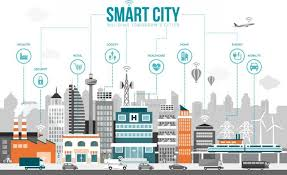
Smart cities represent the future of urban development, where advanced technology is used to improve the quality of life for citizens, enhance infrastructure efficiency, and promote sustainable living. A smart city integrates digital technologies such as the Internet of Things (IoT), artificial intelligence, big data analytics, cloud computing, and advanced communication networks to manage resources and services more effectively.
As urban populations continue to grow rapidly, cities face increasing challenges such as traffic congestion, pollution, energy shortages, waste management issues, and inadequate public services. Smart city technology aims to solve these problems by creating intelligent systems that can monitor, analyze, and optimize urban operations in real time.
What is a Smart City?
A smart city is an urban area that uses digital technologies and data-driven systems to manage infrastructure, services, and resources efficiently. It connects various components of city life, such as transportation, energy, healthcare, education, and public safety, through a centralized or interconnected digital system.
The main objective of a smart city is to improve efficiency, reduce environmental impact, and enhance the overall quality of life for residents. This is achieved by collecting real-time data from sensors and devices distributed throughout the city and using that data to make informed decisions.
How Smart Cities Work
Smart cities operate through a network of connected devices, sensors, and communication systems that continuously collect data from the environment. These sensors are placed in roads, buildings, public transport systems, and utility networks to monitor various conditions such as traffic flow, air quality, energy consumption, and water usage.
The collected data is transmitted to centralized platforms where it is analyzed using artificial intelligence and big data analytics. Based on this analysis, smart systems can automatically adjust city operations, such as optimizing traffic signals, managing energy distribution, or responding to emergencies in real time.
Key Components of Smart Cities
One of the most important components of smart cities is smart infrastructure, which includes intelligent buildings, smart roads, and connected utility systems that operate efficiently using digital technology. Another key component is smart transportation, which involves intelligent traffic management systems, electric vehicles, and real-time public transport tracking.
Smart energy systems are also crucial, as they help manage electricity consumption through smart grids and renewable energy integration. Additionally, smart governance systems enable digital communication between citizens and government services, making public administration more transparent and efficient.
Applications of Smart City Technology
Smart city technology has a wide range of applications across urban environments. In transportation, it is used to manage traffic flow, reduce congestion, and improve public transport efficiency through real-time tracking and automated systems.
In energy management, smart grids help distribute electricity efficiently and integrate renewable energy sources such as solar and wind power. In healthcare, smart city systems enable remote patient monitoring, emergency response coordination, and improved hospital management.
Waste management is another important application, where sensors are used to monitor waste levels in bins and optimize collection routes. Public safety systems use surveillance cameras, AI analytics, and emergency response tools to enhance security and reduce crime rates.
Benefits of Smart Cities
Smart cities offer numerous benefits, including improved efficiency, reduced environmental impact, and enhanced quality of life. By using real-time data and automation, cities can optimize resource usage and reduce waste.
They also improve transportation systems by reducing traffic congestion and travel time. Environmental benefits include reduced pollution and better management of natural resources. Additionally, smart cities enhance public services by making them more accessible, efficient, and responsive to citizen needs.
Economic growth is another major benefit, as smart cities attract investment, create jobs, and foster innovation in technology and infrastructure development.
Challenges of Smart Cities
Despite their advantages, smart cities face several challenges. One of the biggest challenges is data privacy and security, as large amounts of personal and public data are collected and processed. Ensuring this data is protected from cyber threats is critical.
Another challenge is the high cost of infrastructure development, which requires significant investment in Bxh, hardware, and skilled professionals. Interoperability between different systems and technologies can also be difficult, as various devices and platforms must work together seamlessly.
Additionally, digital inequality can be a problem, as not all citizens may have equal access to smart technologies and services.
Future of Smart Cities
The future of smart cities is highly promising as technology continues to advance. In the coming gavangtv, cities are expected to become more autonomous, sustainable, and interconnected. Artificial intelligence will play a major role in managing urban systems, while IoT devices will provide continuous real-time data for decision-making.
We may see fully automated transportation systems, AI-driven governance, and cities powered entirely by renewable energy. Smart cities will also integrate with emerging technologies such as 5G, 6G, edge computing, and blockchain to create more secure and efficient urban ecosystems.
As innovation continues, smart cities will become the foundation of modern urban living, transforming how people interact with their environment.
Conclusion
Smart cities represent a major shift in how urban environments are designed and managed. By combining advanced technologies with data-driven systems, they aim to create more efficient, sustainable, and livable cities.
Although challenges such as cost, security, and infrastructure complexity remain, continuous technological progress is making smart city solutions more practical and widespread. In the future, smart cities will play a central role in shaping global urban development and improving the quality of life for millions of people.
As the world becomes more connected, smart cities will redefine the relationship between humans, technology, and the environment.
Leave a Reply